TV
Director Q&A for “Honour” — From Swedish Original to Korean Adaptation: What to Watch For

Anticipation is building for what promises to be a well-crafted genre piece, and ahead of the broadcast, Park has shared some insights to pique viewers' curiosity.

Q&A with Director Park Gun-ho
Q1. What is 'Honour' about, and what drew you to it as a director?
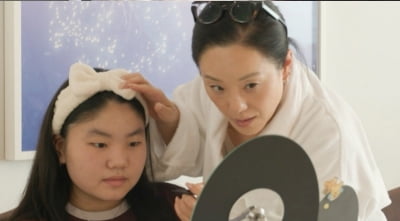
'Honour' is cloaked in mystery, but at its core, it questions the essence of Honour and the convictions worth upholding. As the characters delve deeper into the case, they approach the truth while facing moments that shake their long-held beliefs. I wanted to capture these fractures with nuanced direction. The appeal lies in driving this narrative through the perspectives of three women. The tension and energy that arise when these three distinct lawyers confront a shared past pose critical questions relevant to our times.
Q2. How does 'Honour' differentiate itself from traditional courtroom dramas?
Unlike typical courtroom dramas, 'Honour' leaves questions lingering even after legal verdicts. The courtroom here is less about judging good and evil and more about a space where characters must prove their past and beliefs. The crucial point is whether their choices truly upheld someone's Honour. We focus on the unsettling aftermath of resolved cases. Another distinction is the exploration of responsibility and attitude, avoiding simple good-versus-evil narratives and instead following each character's burdens and subsequent choices.
Q3. What was it like working with Lee Na-young, Jung Eun-chae, and Lee Chung-ah, and why were they cast?
'Honour' is a story where 'the density of relationships' is key. Each actress brings a unique energy, yet together they convincingly portray colleagues of 20 years. Their combined image was particularly compelling. I've long wanted to work with Lee Na-young, whose emotional depth and internal conflict align well with her character. Jung Eun-chae has a knack for capturing subtle emotional flows and is perfect for leading the trio. Lee Chung-ah possesses a unique strength in balancing weight and charm, making her ideal for her role. Casting these three as friends was an excellent choice.
Q4. 'Honour' is based on a Swedish drama. What are the highlights and enhancements of the Korean version?
First, the density of relationships. While the original is strong in plot and structure, the Korean version delves deeper into the shared time and emotions of the three characters. We focus on how their relationship has evolved and distorted over 20 years, rather than using their past as a mere plot device.
We also enhanced the social context. The way scandals operate in Korean society, especially the scrutiny and stigma faced by women, differs from the original. We aimed to portray the reputational and silent pressures characters endure more vividly than the incident itself.
Lastly, as a director, I was conscious of not providing definitive answers. While respecting the original's structural integrity, the Korean 'Honour' refrains from easily judging the characters' choices as right or wrong, leaving room for viewers to reach different conclusions based on their experiences and standards.
Q5. What is the true meaning of 'Honour,' and what message does the drama convey?
The protagonists strive to uphold Honour in different ways, yet they sometimes compromise, ignore, or deceive themselves in the process. 'Honour' aims to highlight how Honour can become a 'burden to bear' rather than a 'value to uphold.' It takes courage to lay down that heavy burden, and the drama seeks to redefine the concept of 'recovery.' Recovery doesn't mean complete healing or forgiveness, nor erasing the past, but choosing to live on despite it. The point where the three characters arrive after their long journey is not a state of resolved peace but a mental space where they no longer need to run away.
'Honour' premieres on Monday, February 2, at 10 PM on ENA and will be available on KT Genie TV.
Lee So-jung, TENASIA Reporter forusojung@tenasia.co.kr